
How AnyArabic Began
Every project has a beginning. For AnyArabic, it was one Arabic course, a growing number of curious learners, and an idea that became bigger than I first imagined.
More than information.
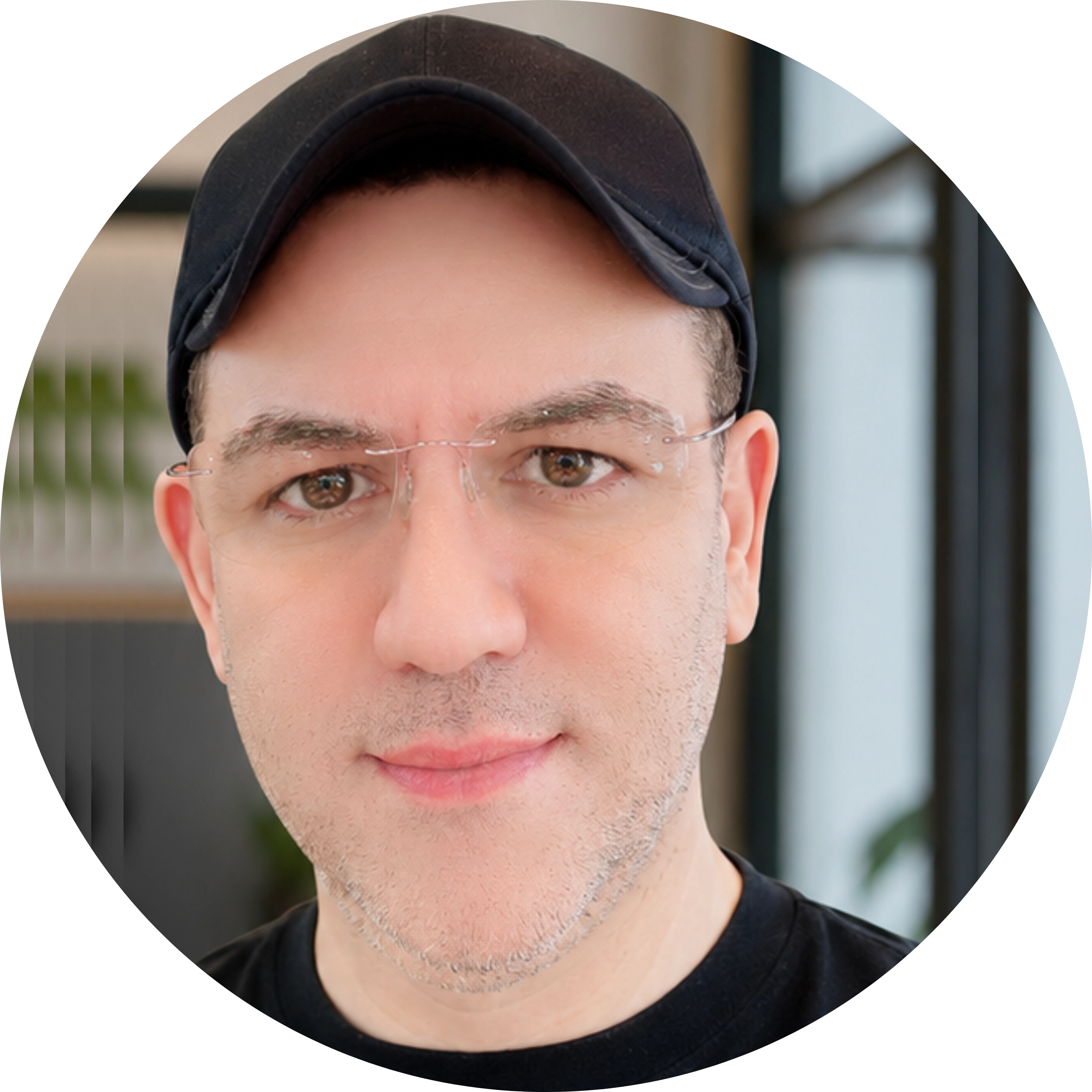
My name is Haytham Ibrahim. I’m an Arabic-language educator specializing in Teaching Arabic as a Foreign Language (TAFL) and Teaching Arabic for Specific Purposes (ASP).
I’ve always believed that learning Arabic should be an understandable, rewarding experience. Students need more than information. They need clear explanations, well-organized lessons, and opportunities to build their understanding over time.
That belief became the starting point for AnyArabic.
2018 — It Started with One Arabic Course.
In 2018, I began my online Arabic-teaching journey with the Real Arabic Course for English Speakers.
My goal was straightforward: create a practical course that helped English-speaking learners understand Arabic through clear explanations and a structured approach.
The course reached students through Udemy, Skillshare, and RealArabic.com. Learners from different countries and backgrounds began studying Arabic through its lessons.
Their feedback was encouraging. Students appreciated the teaching approach and the way complex Arabic concepts were explained in an understandable way.
But something even more valuable emerged from those early teaching experiences.
My students began telling me what they wanted to learn next.
And those conversations gradually changed the direction of my work.
Students Asked for More.
As more learners joined the course, I started receiving messages and questions about subjects beyond what one course could cover.
Some students wanted to continue studying Modern Standard Arabic, including grammar, vocabulary, and more advanced language structures.
Others were interested in Classical Arabic, Qur’anic Arabic, and Tajweed.
Many wanted to understand how Arabic is spoken in everyday life, whether in Egypt, the Levant, the Gulf, North Africa, or other Arabic-speaking regions.
The requests were different, but they revealed something important.
Arabic learners do not all have the same goals.
A student learning Arabic for everyday conversations may need different lessons from someone studying formal Arabic or exploring classical texts.
I began thinking about how to bring these different learning needs together without losing the clarity and structure that made the original course useful.
That question led to a new idea: instead of creating another individual course, why not build a place where learners could explore different areas of Arabic through courses taught by people who know those subjects well?
Bringing Native Arabic Instructors Together.
I knew that building a broader Arabic-learning library would require more than my own teaching experience.
Arabic has many spoken varieties, each with its own pronunciation, expressions, and cultural context. Classical Arabic and specialized language subjects also require particular knowledge and expertise.
Rather than trying to teach every subject myself, I decided to collaborate with native Arabic-speaking instructors from different countries and teaching backgrounds.
I began contacting educators I trusted and inviting them to contribute their knowledge to the project.
Together, we worked on organizing courses and presenting lessons in ways that English-speaking students could follow.
I wanted learners to benefit from the perspectives of different instructors while still having a learning experience built around clarity and structure.
This was the turning point: what began as one instructor’s course was becoming a platform shaped by many educators.
And the idea that would eventually become AnyArabic started taking form.
Malaysia
How the Name AnyArabic Was Born.
Choosing a name for the new platform turned out to be more challenging than I expected.
The original course already had a home at RealArabic.com. But this new project had a much broader purpose.
It was no longer about teaching one subject through one course. It was about bringing together different areas of Arabic learning under one recognizable name.
I still remember sitting at an OldTown café in Kuala Lumpur, Malaysia, with a cup of coffee, a pen, and a piece of paper filled with possible names.
I tried different ideas. Some were too complicated. Others didn’t quite capture what I wanted to build. And many of the domain names I liked were already taken.
Eventually, I stopped thinking about what the platform should be called and returned to a simpler question:
What should this platform help people do?
I wanted English-speaking learners to be able to explore the different kinds of Arabic that interested them.
Modern Standard Arabic. Spoken dialects. Classical Arabic. Qur’anic Arabic.
In other words, I wanted them to be able to learn any Arabic that suited their goals.
Any Arabic.
The name suddenly felt right.
I searched for AnyArabic.com, discovered that it was available, and registered it immediately.
It was simple, easy to remember, and closely connected to the purpose of the platform.
The name wasn’t just a brand choice.
It was a reminder of why the project existed in the first place.
From One Course to a Growing Arabic-Learning Library.
Today, AnyArabic brings together a library of 150 Arabic courses created by more than 100 native Arabic-speaking instructors.
The courses cover three major areas of study: Modern Standard Arabic, spoken Arabic dialects, and Classical and Qur’anic Arabic.
But the purpose has never been simply to collect as many courses as possible.
What matters is how learners experience them.
Students can choose subjects that match their interests, follow structured video lessons, and keep track of their completed lessons as they progress.
When something needs clarification, they can ask questions beneath lessons and learn from explanations provided by instructors.
They can also participate in student discussions, explore questions raised by other learners, and gain additional perspectives on what they’re studying.
For someone building a foundation in Modern Standard Arabic, the goal may be to understand how the language works.
For someone exploring a spoken dialect, it may be to understand everyday expressions and communication.
For another learner, it may be to develop a deeper understanding of Classical Arabic or Qur’anic language.
Different goals require different learning opportunities.
Bringing these courses and instructors together helps make those opportunities easier to explore in one place.
The Mission Continues.
Looking back at where this journey began in 2018, I can see how much the project has grown.
What started with one course became a broader educational platform because students kept asking questions, exploring new subjects, and looking for ways to continue learning.
Their curiosity helped shape AnyArabic.
And the educators who joined the project brought their own knowledge, experience, and perspectives to that vision.
Today, my mission remains rooted in the same principles that guided the original course:
Clear Teaching.Structured Learning.Meaningful Human Interaction.
Learning Arabic takes time, practice, and patience. No single lesson or course can replace that process.
But having well-organized learning materials, knowledgeable instructors, and opportunities to ask questions can make the experience more purposeful and rewarding.
That’s what I want AnyArabic to continue offering.
If you’re beginning your Arabic-learning journey—or looking to explore a new area of the language—I invite you to discover the courses and instructors that have become part of this story.
Haytham Ibrahim | Founder of AnyArabic